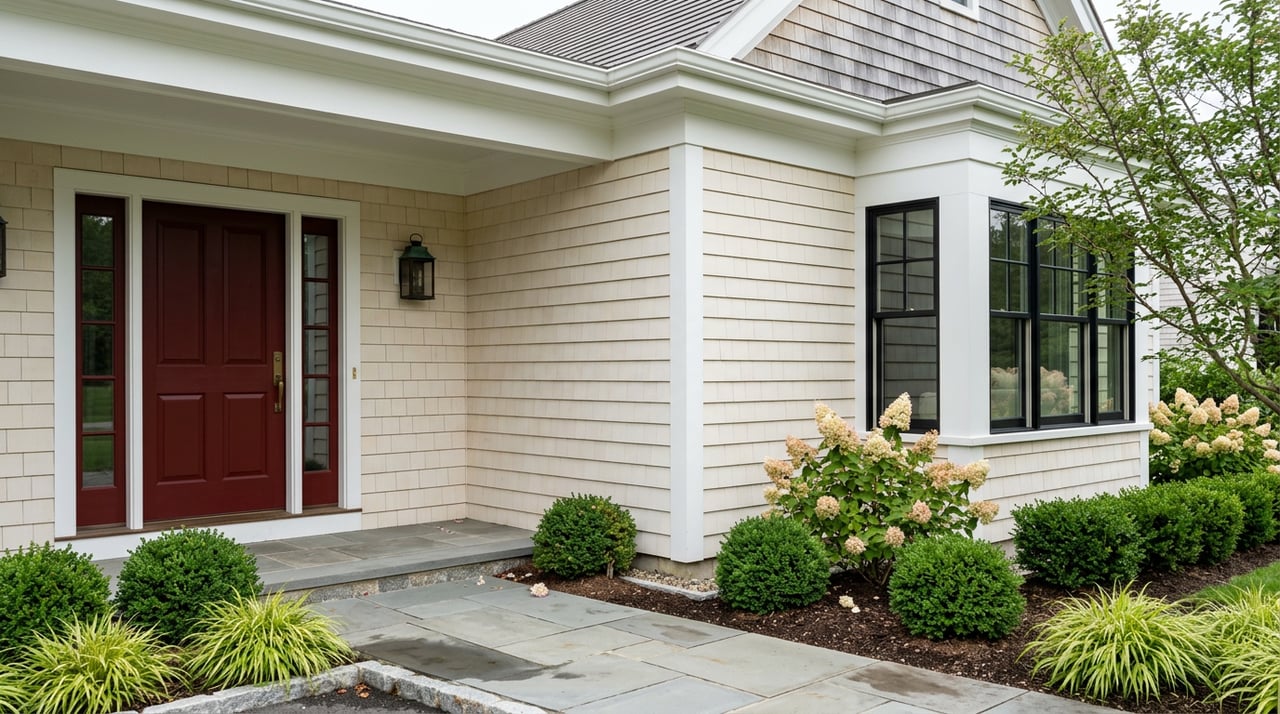
What is a home in Centerport actually worth right now? Ask three sources and you'll get three different answers, and the gap between them isn't a rounding error. Redfin put the median sale price at $1,321,709 in May 2026, a 33.5 percent jump from a year earlier. Zillow's home value index, updated through June 30, 2026, put the town's average value at $955,837, up a modest 1.5 percent. Movoto's July 2026 tracking showed homes listed at a median of $1.07 million. Three respected sources, three numbers more than $360,000 apart, all describing the same two square miles of hamlet on the North Shore.
That spread is the story. It isn't a data error and it isn't a market on fire. It's what happens when you calculate a "median" from a sample so small that almost any single sale can swing it.
The Reason Is Arithmetic, Not the Market
Redfin's own tracking shows why. In the most recent one-month stretch it published sales counts for, only three homes sold in all of Centerport. A median with three data points is just the middle one. If that middle sale happens to be a waterfront colonial on the Vanderbilt Peninsula, the number looks like a hot luxury market. If it happens to be a modest ranch off Old Northport Road, the same town looks flat. Nothing about buyer demand needs to change for the headline number to move by six figures.
Compare that to Huntington proper, just over four miles from Centerport's own shoreline. Redfin recorded 27 home sales there in May 2026 alone, down from 43 the year before, still enough volume that no single closing can dominate the result. Homes.com counted 356 sales across the trailing 12 months. With that many transactions, outliers get absorbed into the middle instead of becoming the middle. Huntington's median sale price, $917,000 over the three months ending May 2026, moved a comparatively tame 4.0 percent down year over year. That's what a liquid market's median looks like. Centerport's is what a thin one looks like.
Zillow's ZHVI number sits closer to the calm end of that range for a different reason. It isn't a median of homes that actually sold. It's a modeled estimate across every home in town, owned or not, smoothed specifically to reduce the kind of swing a three-sale month produces. That's a legitimate way to measure value. It's also measuring a different question than "what did the last few buyers actually pay," which is the number most people mean when they ask about the market.
Three homes sold. That's the entire sample behind the number you're reading on your phone.
New York State's own standards for these calculations add another wrinkle. To count toward a residential median, a sale has to be arm's length, coded non-condominium, priced above ten dollars, and closed within roughly a year of contract. In a town with only a handful of closings, whether an estate sale or an as-is renovation project happens to qualify can change which homes make up the sample at all.
What This Means If You're Selling on the Peninsula
Pricing off Centerport's hamlet-wide median is close to useless if your home sits in Salem Ridge, a newer cluster of one-acre, cul-de-sac colonials in the Harborfields district, or in the older, more established President's Section closer to the water. A recent sale on the Little Neck Peninsula, a four-bedroom colonial with a whole-home natural gas generator, closed in the Blue Ribbon-rated Harborfields district and would carry an entirely different comp set than a renovated split-level on 1.25 acres near Merriwood Court, even though both are technically "Centerport" sales that could end up in the same three-home monthly sample.
The fix isn't complicated, but it does mean more legwork than pulling a Zestimate. Comps need to be built street by street, sometimes association by association, using actual closed sales with comparable lot size, water access, and school assignment rather than a town-wide average that might be built on two sales that have nothing to do with your street.
What This Means If You're Buying In
Buyers chasing Harborfields schools face the same distortion from the other side. A single listing labeled "Centerport" might come with deeded access to the Huntington Beach Community Association, a private beach and clubhouse with dock and mooring rights, an annual membership of just $345, and a calendar that includes Summer Camp, Lobsterfest, Family Day, and fall bonfires. Another might sit inland with none of that. Both could show up in the same median. Proximity to Mill Pond, where eagles nest and give the area its "Centerport Eagles" nickname, or to Heron Park's eagle-watching spot, or to the Vanderbilt Museum's 43-acre grounds, can carry a real premium on specific streets that a town-wide number will never reflect.
Carrying costs add a layer buyers often miss entirely. Centerport is an unincorporated hamlet within the Town of Huntington, so a home there is typically taxed at the township rate without an added village layer. Cross into neighboring Northport Village, though, and that changes. One recent listing just over that line showed $8,803.43 in Huntington Township tax stacked with $3,159.20 in Northport Village tax, a combined $11,962.63 for 2026. Two homes at the identical purchase price, on either side of an invisible line, can carry meaningfully different annual costs. That's worth confirming with the town assessor before comparing two "similar" listings on price alone.
How Thin Is Thin? A Same-Month Comparison
| Area | Homes Sold (recent one-month window, 2026) | Median Price | Year-over-Year Change |
|---|---|---|---|
| Centerport | 3 | $1,321,709 | +33.5% |
| Northport, luxury-tier listings | 2 | $984,000 (median list) | not reported |
| Huntington (village/proper) | 27 | $917,000 | -4.0% |
Even Northport's own luxury segment, when you narrow the sample further, drops to two sales in a month. That's not a coincidence. It's the same mechanism showing up again the smaller you slice the market. The lesson scales in both directions: the more specific your search gets, whether by hamlet, price tier, or association, the more a single closing can distort what looks like a market trend.
Frequently Asked Questions
How many homes actually sell in Centerport each month? Based on Redfin's own tracking, as few as three homes closed in a recent one-month period. A sample that small means one high-value waterfront sale, or one distressed as-is sale, can move the published median by six figures without anything changing about underlying demand.
Why do Zillow and Redfin show different prices for the same town? They're measuring different things. Redfin's median sale price is the literal midpoint of whichever homes closed in that window. Zillow's ZHVI is a modeled estimate across every home in town, sold or not, smoothed specifically to reduce that kind of swing. Neither is wrong. They answer different questions.
Does Centerport have its own village property tax like Northport? No. Centerport is an unincorporated hamlet within the Town of Huntington, so it typically doesn't carry the extra village tax layer that an incorporated village like Northport does. Buyers comparing homes across that line should still confirm current rates with the town assessor rather than assuming similar list prices mean similar carrying costs.
A town-wide median can tell you almost nothing useful about a specific street in a market this thin, and treating it like a benchmark is how sellers underprice a waterfront estate or overprice a home three blocks inland. Kieran Rodgers builds pricing strategy from actual closed comps on your street, in your school zone, at your amenity level, backed by a mortgage-banking background that keeps financing timelines from becoming a surprise mid-contract. If you're weighing a move in or out of Centerport, Schedule Your Private Consultation and get a read on the market that goes past the headline number.