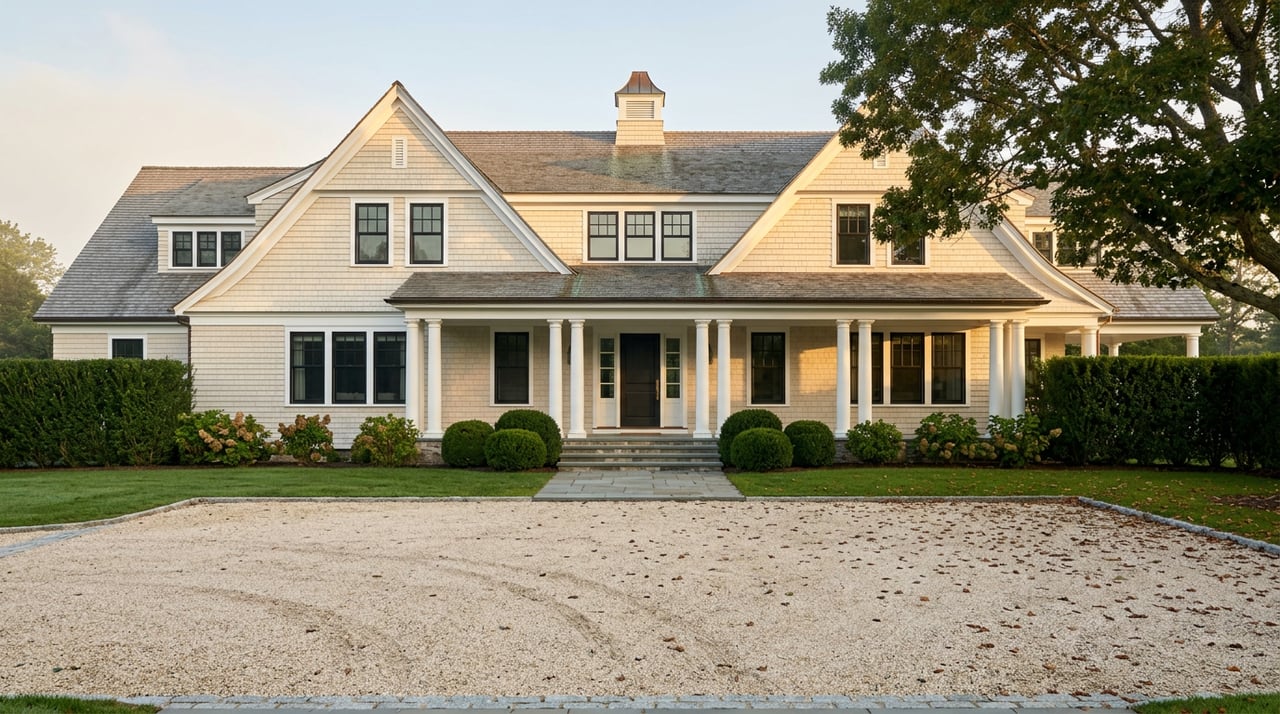
Picture a buyer shopping the North Shore this year who falls for a Huntington-area home priced at $1.22 million. Credit is solid but not spotless. The down payment sits at 5 percent. A loan officer runs the conventional numbers first, the way most files start, and the math doesn't clear. Then FHA gets run instead. It clears, with room to spare.
That shouldn't happen. FHA is the program built for first-time buyers with thinner credit files and smaller down payments, not for financing that pushes past $1.2 million. But in 2026, in Nassau and Suffolk County, it can. A federal formula quirk has pushed the FHA loan limit above the conventional conforming limit in a reversal mortgage analysts describe as historically rare, and almost nobody outside a mortgage desk has noticed.
The Order Everyone Assumes, and the One Year It Flipped
Ask most buyers, agents, or even loan officers to rank financing options by how much they'll let you borrow before hitting stricter underwriting, and conventional wins. FHA exists to expand access, not to out-lend the conventional market. That ranking has held for years because it's baked into how the two loan limits are calculated.
In 2026, that order inverted in Nassau and Suffolk County, along with 22 other counties nationally: New York City's five boroughs, Westchester, Rockland, and Putnam in New York, a dozen counties across northern and central New Jersey, and two mountain resort counties in Colorado anchored by Aspen and Glenwood Springs. Here's what changed on Long Island:
| 2025 | 2026 | |
|---|---|---|
| Conforming loan limit (Nassau & Suffolk) | $1,209,750 | $1,209,750 |
| FHA loan limit (Nassau & Suffolk) | $1,209,750 | $1,249,125 |
| Gap | $0 | $39,375 |
The conforming limit didn't move. The FHA limit jumped $39,375. For a one-year window, a Long Island buyer using FHA financing can qualify for a larger loan than the same buyer using a conventional conforming mortgage, purely because of where the number landed in the paperwork.
Why the Ceiling Held Still While the Floor Moved
The gap isn't a market signal. It's a byproduct of two federal agencies running two different formulas off the same underlying home price data.
The Federal Housing Finance Agency sets the conforming loan limit under a rule from the Housing and Economic Recovery Act that prevents it from ever lowering a county's limit, even when the formula would call for one. When local price appreciation doesn't clear the bar for an increase, the prior year's number holds. Nationally, the statutory ceiling for high-cost counties rose from $1,209,750 to $1,249,125 for 2026, a $39,375 jump most expensive metros picked up automatically. Nassau and Suffolk didn't. Local price appreciation through the measurement period wasn't strong enough to justify moving off last year's number, so the conforming limit stayed frozen at $1,209,750 even as the national ceiling moved above it.
The Department of Housing and Urban Development calculates FHA limits under a separate statute, the National Housing Act, and that formula did produce an increase for the same counties, landing FHA at the new $1,249,125 ceiling. Two formulas, one set of home prices, two different answers. The HUD announcement and the FHFA's own release both confirm the same underlying numbers, they just sit on opposite sides of a bureaucratic seam that rarely gets tested this visibly.
Who the Gap Actually Helps
This isn't a reason to steer every Long Island buyer toward FHA. For a borrower with strong credit and a real down payment, conventional financing still tends to carry a better rate, cheaper mortgage insurance, and fewer overlays. If you can qualify for both, conventional at $1,209,750 usually beats FHA at $1,249,125 even with the higher ceiling.
The gap matters for a narrower group: buyers whose loan amount would land between $1,209,750 and $1,249,125 and who wouldn't clear conventional underwriting on their own terms. That includes borrowers with credit scores in the 580 to 700 range who'd face a rate penalty or an outright denial on the conventional side, buyers whose debt-to-income ratio sits above the roughly 45 percent conventional ceiling but under FHA's more permissive 57 percent limit, and buyers putting down between 3.5 and 5 percent, where FHA's minimum clears them without needing the larger down payment conventional lenders often want to avoid private mortgage insurance.
That's a real, identifiable slice of the North Shore buyer pool. It's not everyone. It's the buyer stretching to make a specific number work.
What the Band Looks Like on the North Shore
The $1,209,750 to $1,249,125 band isn't an abstraction on Long Island's North Shore. It's a price point a meaningful slice of the higher end of the market actually touches, even where the township-wide numbers suggest otherwise.
Huntington's own median numbers sit well clear of that band. The town's median sold price moved between roughly $917,000 for the three months ending May 2026 and $978,000 in July 2026, and the median list price stood at $929,000 as of August 2026, down 6 percent from a year earlier. None of that touches $1.2 million.
But a township median hides the top of the market, and the North Shore's most sought-after addresses don't cluster near the median. Cold Spring Harbor, part of Huntington township at the Nassau County line, routinely lists estate-caliber properties starting above $1 million and running past $3 million. For a buyer financing toward the upper end of Huntington proper, or anywhere in Cold Spring Harbor or a comparable Gold Coast hamlet, the $1.2 million range isn't an outlier price, it's a common one, and it's exactly where this financing quirk starts to matter.
For a buyer financing a $1.23 million purchase in that corridor with a 5 percent down payment and a credit score in the mid-600s, the choice between FHA and conventional this year isn't academic. It's the difference between a loan that clears and one that doesn't.
The gap exists because a federal formula froze in place for one county pair while a different federal formula moved. It won't announce itself on a listing sheet. It shows up when a loan officer runs the numbers twice and gets two different answers.
What This Means If You're Financing Near the Threshold
If your target price sits in the $1.2 million to $1.25 million range on Long Island, ask your lender to run both scenarios before assuming conventional is automatically the stronger option. Have them show you the FHA numbers alongside the conventional ones, not because FHA will always win, but because this specific year it might for reasons that have nothing to do with your finances and everything to do with two agencies using different math.
For sellers pricing a home near that same threshold, the practical effect is a slightly wider buyer pool for one year. A buyer who might have been priced out of a conventional loan at $1.22 million has a real path through FHA that didn't exist in quite the same form last year. It's a narrow effect, but on a listing that's been sitting, narrow can be the difference that gets an offer across the finish line.
This gap isn't permanent. It exists because the conforming limit didn't move this cycle while the FHA ceiling did. If Nassau and Suffolk home prices post the appreciation needed to clear FHFA's threshold next year, the conforming limit could catch up to the FHA ceiling and the gap closes on its own. Nobody legislates it away. It just narrows the next time the formula runs.
Frequently Asked Questions
Does this gap apply everywhere in New York, or just Nassau and Suffolk? It applies to the ten New York counties in the high-cost tier: the five New York City boroughs, Nassau, Suffolk, Westchester, Rockland, and Putnam. All ten share the same $1,209,750 conforming limit and $1,249,125 FHA limit in 2026, so the same $39,375 gap exists across the entire tier, not just Long Island.
Is FHA now the better loan for high-value Long Island purchases? No. For buyers who qualify for both programs, conventional financing generally still offers a better rate and lower ongoing mortgage insurance costs. The FHA-exceeds-conforming gap only changes the calculus for buyers who wouldn't otherwise clear conventional underwriting at their target loan amount.
Will this gap still exist next year? Not necessarily. It exists because Nassau and Suffolk's conforming limit was held flat under FHFA's hold-harmless rule while the national high-cost ceiling moved up. If local home prices appreciate enough to clear that threshold in next year's calculation, the conforming limit rises to meet the FHA ceiling and the gap disappears.
Financing quirks like this one rarely show up on a listing sheet, and they change year to year based on formulas most buyers never see. If you're weighing a purchase or a sale anywhere near that $1.2 million mark on Long Island's North Shore, Kieran Rodgers can walk you through exactly how this year's numbers apply to your specific transaction. Schedule Your Private Consultation to get financing clarity before you write an offer, not after.